
Caffeine At Work: Understanding Its Role In Alertness & Productivity
Caffeine is one of the most popular ingredients utilized by Americans daily, particularly in the workplace. According to the IFIC Spotlight Survey: Americans’ Perceptions of Caffeine, almost 90% of adults are consuming caffeine every day. Caffeine is classified as Generally Recognized as Safe, or GRAS, for consumption, yet most Americans are unaware of how much caffeine is in fact considered safe. The FDA states healthy (non-pregnant) adults may consume no more than 400mg of caffeine per day; however, tolerance levels can differ by individual.
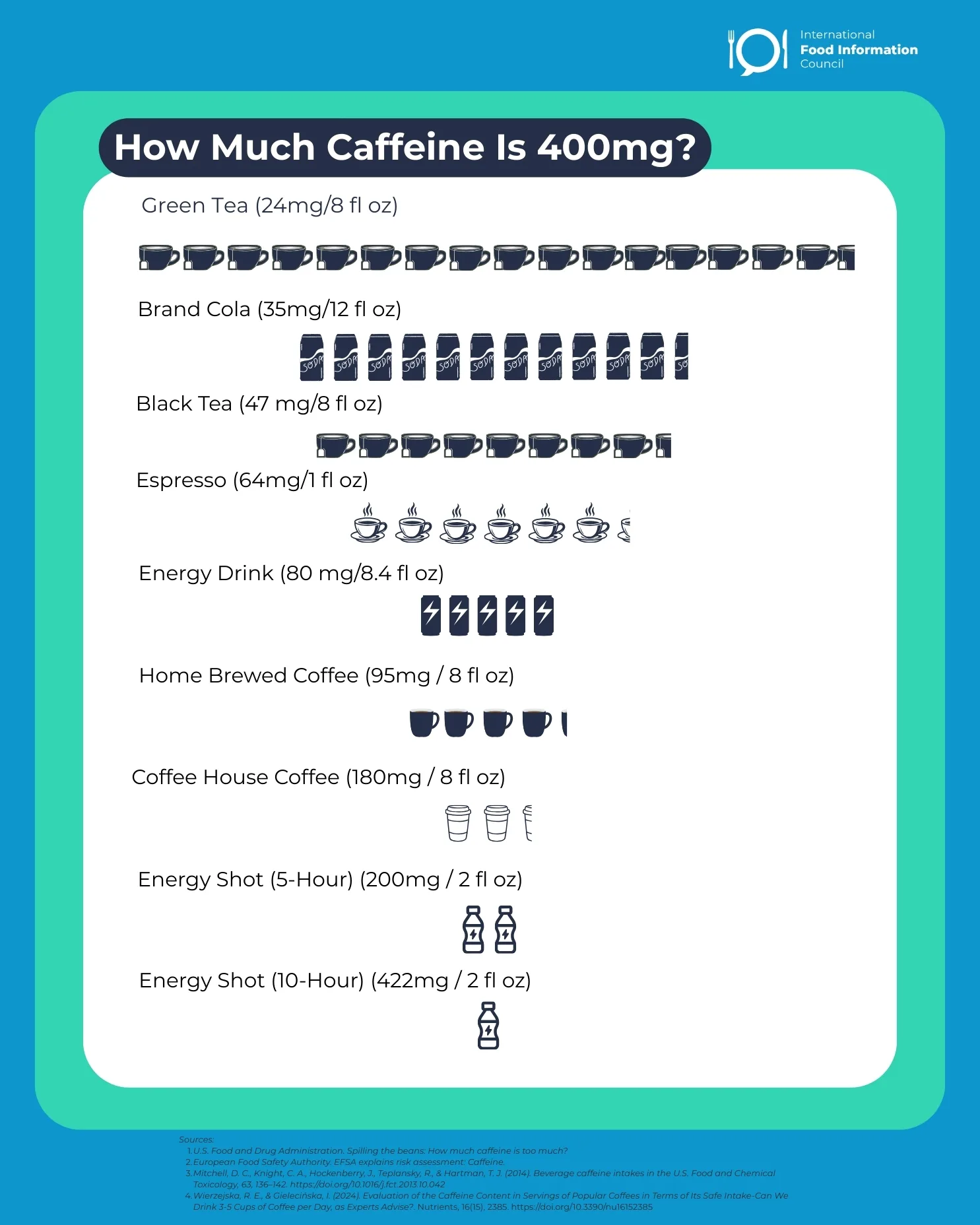
Caffeine is found naturally in over 60 plants, including coffee beans, tea leaves, cola nuts and guarana berries. There are also synthetic versions of caffeine used in medications, foods and drinks. No matter the source, the effects of caffeine are the same. Popular sources and approximate amounts of caffeine include:
- Coffee (95mg per 8-ounce cup home-brewed coffee)
- Tea (24mg per 8-ounces green tea or 47mg per 8 ounces black tea)
- Soda (35mg per 12-ounce can)
- Energy Drinks (80mg per 8.4 fluid ounces)
- Energy Shots (200mg per 2-ounce shot)
Caffeine is often consumed in the morning to wake up and feel alert or as a pick-me-up during the common afternoon slump. With so many people using caffeine throughout the day, you may be wondering: does caffeine affect productivity? It’s true that caffeine can help keep us alert and productive in our workdays—let’s explore how and what else we should keep in mind.
What The Research Says
With so many folks turning to caffeine in their days, here’s what the science says when it comes to using caffeine for alertness, energy and productivity in the workday.
Caffeine’s Impact On Alertness
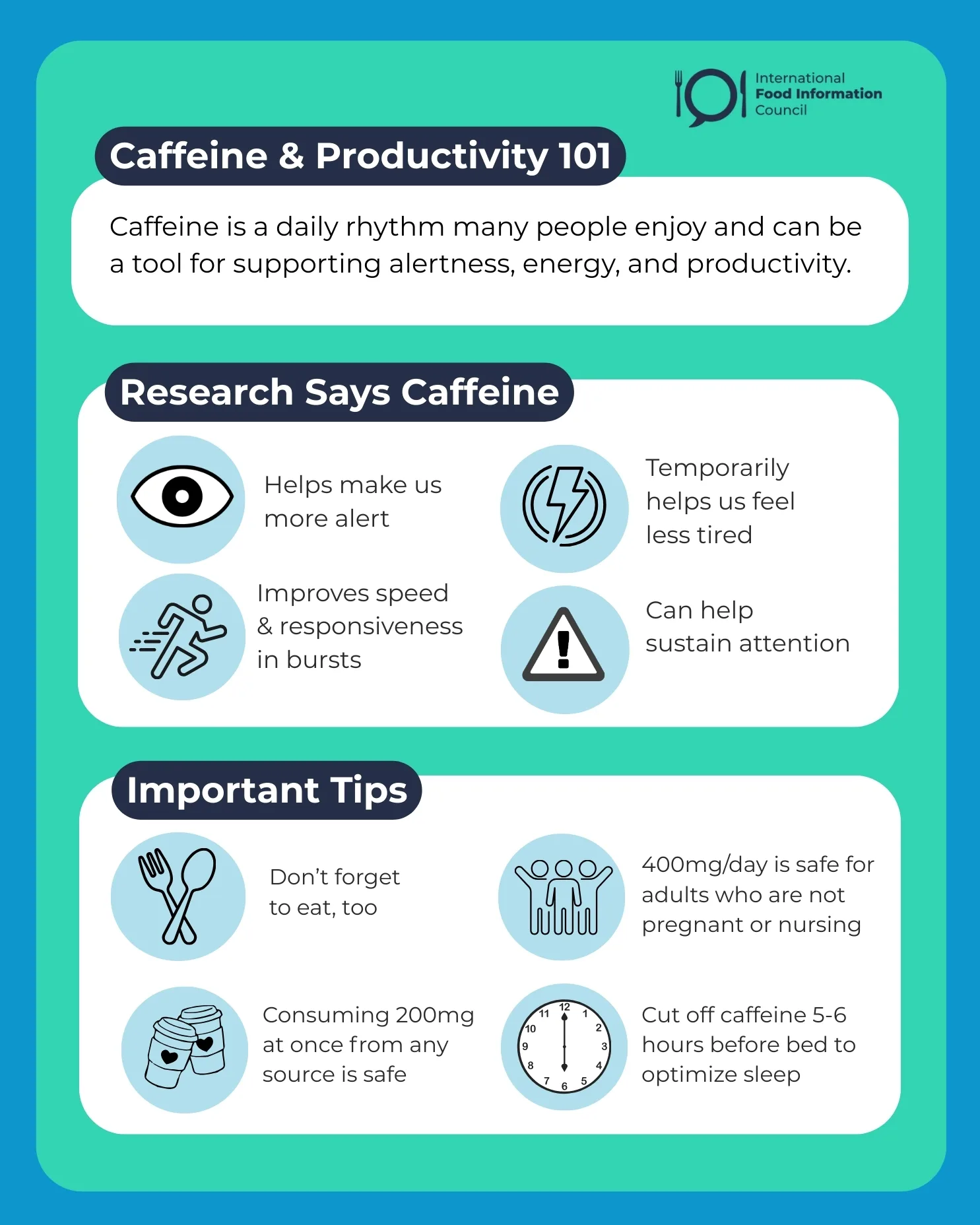
One of caffeine’s biggest benefits at work is that it can help improve alertness, focus and reaction time. If you have a poor night’s sleep or are feeling a little unfocused during the day, caffeine may help sharpen attention and help you stay mentally engaged as the day goes on. Caffeine can improve both reaction time and accuracy on attention tasks, yet more is not always better. Research suggests higher doses may continue to improve speed, while accuracy appears to improve only up to a point before declining, and benefits for judgment and decision-making are less consistent. Caffeine also has an average half-life of about 5 hours, which means that your body eliminates half of the caffeine in your system in about 5 hours.
Caffeine’s Impact On Energy
Caffeine can be helpful when you’re dragging, because it reduces feelings of fatigue and helps you feel more awake, alert, and focused. But it does not provide energy in the same way food does. Carbohydrates, fat, and protein provide calories that fuel the body, while caffeine works as a stimulant that temporarily changes how alert and energized you feel. That can be helpful in the short term, especially after poor sleep, but relying on caffeine alone instead of eating regularly may leave you feeling under-fueled later in the workday. Pairing caffeine with food is the smartest strategy because it helps support more stable energy overall.
Caffeine’s Impact On Productivity
When you have a busy day ahead, caffeine may help you stay on track by improving focus, responsiveness, and the ability to sustain attention. Research suggests it can be especially useful for tasks that require vigilance, reaction time, and consistent mental effort, particularly when you are tired or sleep-deprived. Yet caffeine is less reliably helpful for more complex thinking, such as judgment and decision-making. For jobs that require a high level of technical precision, it may increase speed and alertness, yet too much (either exceeding the 400mg/day limit or above your personal tolerance) can also contribute to jitteriness or anxiety that may work against performance.
Strategies For Utilizing Caffeine At Work
- Have caffeine with a meal, not as a meal. While caffeine can help you feel more energized, it doesn’t directly provide the body with energy the way food does. Try combining your caffeine with your first meal of the day to set yourself up for sustainable energy to promote that alertness and productivity.
- Pay attention to timing. The more time you give yourself between your caffeine and sleep, the better you will support your overall circadian rhythm. The goal is to cut off caffeine about 5-6 hours before you plan to sleep, so you can allow the body to properly unwind for more restful sleep. Decaf or low-caffeinated sources, like herbal tea, are typically better to enjoy as you get closer to bedtime.
- Know your caffeine content. Many people are surprised to learn that their favorite coffee shop order can often be double the amount of caffeine they may brew at home or in standard ready-to-drink energy drink or bottled tea. Be aware of caffeine content by either reading beverage labels or visiting your favorite spot’s website or app for the caffeine count of your go-to order. The IFIC Caffeine Calculator is a helpful tool for estimating your usual caffeine intake. It’s also important to know what your personal caffeine tipping point is with certain amounts and sources.
- Be mindful of excess sugar and calories. While caffeine itself does not contain calories, caffeinated drinks can contain added sugars, saturated fats and excess calories. While it is okay to enjoy those from time to time, consider tips like cutting back on sugar, using low- and no-calorie alternatives, and using low-fat dairy or unsweetened non-dairy sources in place of cream.
- Space out your caffeine. The European Food Safety Authority states that single doses of caffeine up to 200mg from all sources do not raise safety concerns in generally healthy non-pregnant adults. In other words, it’s generally recommended to have no more than 200mg of caffeine at once. If you find yourself reaching for another caffeine source after you’ve recently had one, be sure to space it out several hours to give your body time to process it.
Expert Takeaway: Caffeine’s Impact on Productivity
Caffeine is a daily ritual many people enjoy as part of their workday—and when used thoughtfully, it can be a helpful tool for supporting alertness, energy, and productivity. Getting the most out of caffeine is all about personalization: understanding your own tolerance, choosing sources that work well for you, and being mindful of timing and amount. Many people find that enjoying caffeine earlier in the day and alongside food helps optimize its workplace benefits while supporting overall well-being, including quality sleep. Head to the IFIC Caffeine Toolkit for more info and the latest research about caffeine.
Sources:
- IFIC Spotlight Survey: Americans’ Perceptions Of Caffeine. International Food Information Council (IFIC). www.ific.org.
- Spilling the Beans: How Much Caffeine is Too Much? U.S. Food & Drug Administration
- European Food Safety Authority. Caffeine: EFSA estimates safe intakes.
- McLellan TM, Caldwell JA, Lieberman HR. A review of caffeine’s effects on cognitive, physical and occupational performance. Neurosci Biobehav Rev. 2016 Dec;71:294-312. doi: 10.1016/j.neubiorev.2016.09.001. Epub 2016 Sep 6. PMID: 27612937.
- Kløve K, Petersen A. A systematic review and meta-analysis of the acute effect of caffeine on attention. Psychopharmacology (Berl). 2025 Sep;242(9):1909-1930. doi: 10.1007/s00213-025-06775-1. Epub 2025 May 7. PMID: 40335666.
- Irwin C, Khalesi S, Desbrow B, McCartney D. Effects of acute caffeine consumption following sleep loss on cognitive, physical, occupational and driving performance: A systematic review and meta-analysis. Neurosci Biobehav Rev. 2020 Jan;108:877-888. doi: 10.1016/j.neubiorev.2019.12.008. Epub 2019 Dec 16. PMID: 31837359.
- Rodak K, Kokot I, Kratz EM. Caffeine as a Factor Influencing the Functioning of the Human Body-Friend or Foe?. Nutrients. 2021;13(9):3088. Published 2021 Sep 2. doi:10.3390/nu13093088
- Fiani B, Zhu L, Musch BL, et al. The Neurophysiology of Caffeine as a Central Nervous System Stimulant and the Resultant Effects on Cognitive Function. Cureus. 2021;13(5):e15032. Published 2021 May 14. doi:10.7759/cureus.15032
- Temple JL, Bernard C, Lipshultz SE, Czachor JD, Westphal JA, Mestre MA. The safety of ingested caffeine: a comprehensive review. Food Chem Toxicol. 2023;173:113642. doi:10.1016/j.fct.2023.113642
- Walter K. Caffeine and Health. JAMA. 2022;327(7):693. doi:10.1001/jama.2021.21452
- Operational Supplement Safety (OPSS). Caffeine for performance.