
Portion Size Guide: How Much Should You Eat?
Understanding portion sizes can help you build balanced meals without overthinking it. This portion size guide explains the difference between portion size and serving size, offers examples of common food portions, and shares how to calculate portion size with or without measuring tools.
What Is Portion Size?
Portion size is the amount of food or drink someone is served, puts on their plate or in a container, or chooses to eat or drink at one time. Portion sizes may vary based on your hunger, activity level, health goals, and overall eating pattern. A registered dietitian can help you figure out the right portion size for you.
Portion size is different from serving size. A serving size is a standardized amount of food or drink used on the U.S. Nutrition Facts label to show calories and nutrients. Serving sizes reflect how much people typically eat or drink, not necessarily how much they should.
Why Is Portion Size Important?
The amount of a food or beverage in front of you is a key factor in how much you decide to eat. Research indicates that larger portion sizes lead people to consume more calories, which may contribute to weight gain over time. Learning how to recognize and manage portion sizes can help support balanced eating without requiring strict rules or eliminating your favorite foods.
The Dietary Guidelines for Americans (DGA) encourage healthier food and beverage choices and appropriate portion sizes to support healthy eating patterns. Managing portion sizes is especially important for foods and beverages that are less nutrient-dense, meaning they provide higher amounts of calories, added sugars, saturated fat, and/or sodium, but relatively few beneficial nutrients such as fiber, vitamins, and minerals.
IFIC Research and Consumer Insights have consistently found that Americans use portion size as one practical way to support healthier eating habits. Among Americans trying to limit or avoid added sugars, 27% say they do so by consuming smaller portions.
A healthy eating pattern can include some added sugars, saturated fat, and sodium, but there is limited room for them. For many people, a flexible approach is more sustainable: choosing nutrient-dense foods and beverages more often, while enjoying indulgent options occasionally, less frequently, and in smaller portions.
What Does A Portion Size Look Like?
Portion size can look different depending on the food, your needs, and the eating occasion. In this portion size guide, you’ll find examples of common foods that can be used as a starting point for estimating portions. These amounts are not a one-size-fits-all recommendation, but they can help you calculate portion size.
Proteins
| Food | Common Portion |
|---|---|
| Chicken Breast | 3 oz |
| Ground Beef | 3 oz |
| Salmon | 3 oz |
| Eggs | 1 egg |
| Steak | 3 oz |
| Nuts | ¼ cup (about 1 oz) |
| Peanut Butter | 2 Tablespoons (Tbsp) |
| Chickpeas | ½ cup |
| Black Beans | ½ cup |
Grains
| Food | Common Portion |
|---|---|
| Oatmeal | ½ cup |
| Rice | ½ cup |
| Quinoa | ½ cup |
| Pasta | ½ cup |
| Sliced Bread | 1 slice |
| Tortilla | 1 tortilla |
Vegetables
| Food | Common Portion |
|---|---|
| Spinach, raw | 2 cups |
| Carrots, chopped/sliced | 1 cup |
| Broccoli, cooked | ½ cup |
Fruits
| Food | Common Portion |
|---|---|
| Blueberries | 1 cup |
| Strawberries | 1 cup |
| Apple | 1 medium, whole apple |
| Orange juice | 1 cup |
Dairy
| Food | Common Portion |
|---|---|
| Milk | 1 cup |
| Yogurt | 1 cup |
| Cheese | 1.5 oz |
Fats
| Food | Common Portion |
|---|---|
| Olive oil | 1 teaspoon (tsp) |
| Butter | 1 teaspoon (tsp) |
| Salad dressing | 2 Tablespoons (Tbsp) |
Portion Sizes In Context: How Much Should I Eat In A Day?
Portion sizes are most helpful when viewed within the context of an overall healthy eating pattern. Federal dietary guidance and organizations such as the American Heart Association (AHA) offer food group recommendations to help people build balanced meals and snacks throughout the day.
For example, within a 2,000-calorie healthy eating pattern, food group guidance generally includes:
- Vegetables: 2-3 servings (about 2.5 cups)
- Fruit: 2 servings (about 2 cups)
- Grains: 3-6 servings (at least half of which should be whole grains)
- Dairy: 3 servings (about 3 cups)
- Protein: 2-4 servings of protein (about 5.5 oz)
Individuals have different nutrition and energy needs depending on many factors, including age, sex, body size, activity level, health status, health goals, and life stage, such as pregnancy or breastfeeding. For personalized guidance, consider working with a healthcare professional, such as a registered dietitian.
How To Calculate Portion Size
There are several ways to calculate portion size. These quick tips outline how to figure out portion size, depending on your needs and what you have on hand:
- Use measuring tools when helpful: Measuring cups, spoons, or a food scale can help you learn what common portions look like.
- Check the Nutrition Facts label: For packaged foods, look at the serving size and number of servings per container. Then compare that amount to how much you actually eat or drink.
- Be aware that the serving size listed on a Nutrition Facts label may not be the same as the portion size that is right for you. It is a reference amount that can help you understand the nutritional information for the food.
- Use your hand as a visual guide: When measuring tools are not available, your palm, fist, cupped hand, and thumb can help estimate common portions of protein foods, vegetables, grains, and fats. These estimates are not exact, but they can make portion planning easier when you are eating away from home.
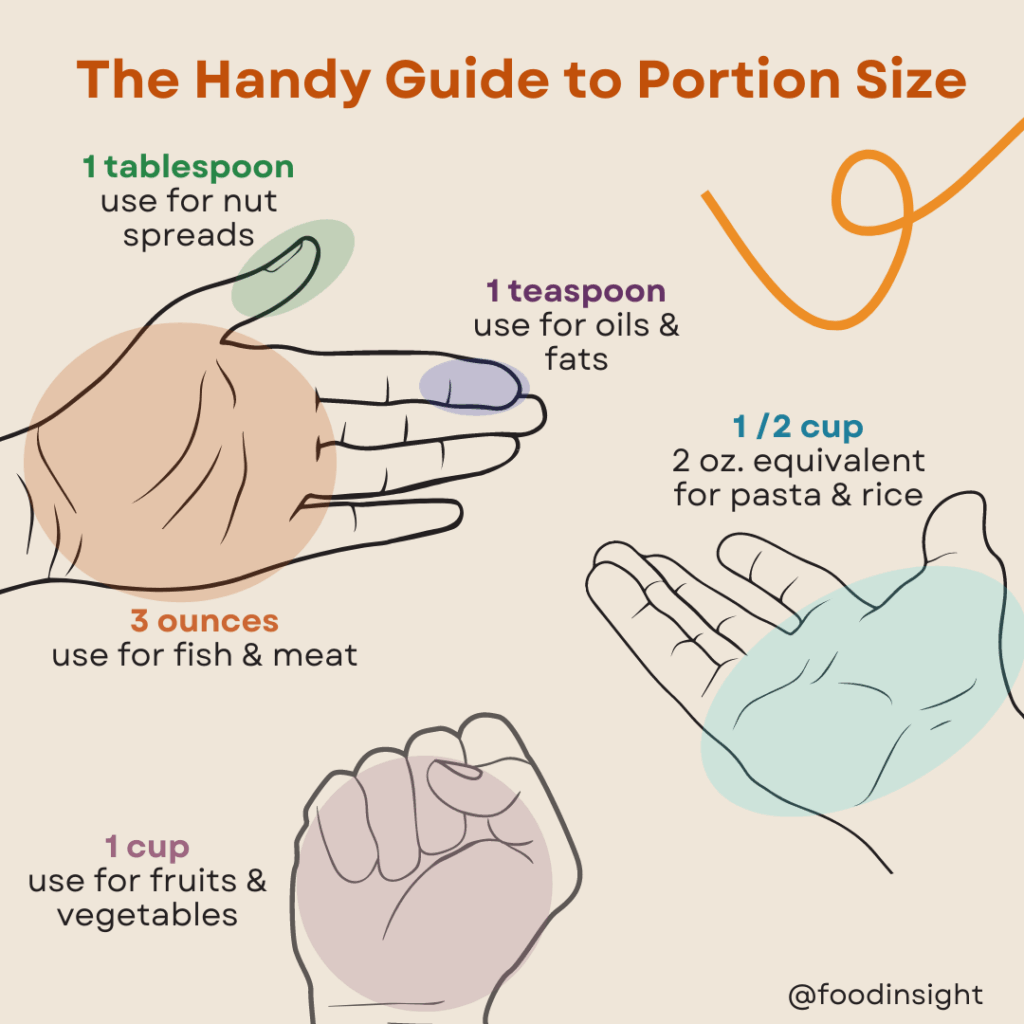
Ultimately, adjust your portion size based on your needs. The right portion for you may depend on your hunger, activity level, health goals, and what else you eat throughout the day.
Tips For Managing Portion Sizes In Everyday Life
Whether you are eating at home, dining out, or grabbing food on the go, portion sizes can be hard to judge. Here are few actionable steps that can help you choose appropriate portion sizes.
On The Go Or At The Grocery Store
Packaged foods and drinks often come in a variety of sizes. Smaller, single-serve packages can be convenient and may help with portion control.
To help manage portions on the go with packaged foods and drinks:
- Check the serving size and servings per container on the Nutrition Facts label.
- Compare the serving size with how much you usually eat or drink.
- Choose single-serve packages when they are helpful and fit your needs.
- Portion foods and drinks from larger packages into smaller travel-friendly containers.
Dining Out
Restaurant portions are often larger than you might want or need to feel satisfied.
To help manage portions at restaurants:
- Ask your server about portion sizes, especially at a restaurant you have not visited before.
- Look for smaller options, such as appetizers, small plates, tapas, half portions, or side dishes.
- Consider sharing an entrée with someone else.
- Ask for a to-go box ahead of time and save part of the meal for later.
- Decide how much you want to eat before you start, especially if the portion is large.
- Pair richer or larger entrées with vegetables, salad, fruit, or other, lighter sides, when available.
- Eat slowly and pause during the meal to check your hunger and fullness.
Dining At Home
When cooking at home, you have more control over how much food you prepare, serve, and eat. Still, knowing what a reasonable portion looks like can be confusing.
To help manage portions at home:
- Eat from a plate or bowl rather than the package to reduce mindless eating.
- Measure or weigh portions when helpful to learn what different portion sizes look like.
- Use smaller plates and bowls to help portions look more satisfying and reduce the chance of overserving.
- Portion leftovers into containers before serving to make it easier to save food for another meal
Example: How To Figure Out Portion Size for Spaghetti at Home
A reasonable portion of spaghetti for many people is about 1 cup of cooked spaghetti, or about 2 ounces dry. This may look smaller than a typical restaurant portion, which is why measuring at home a few times can help reset expectations.
To measure or estimate spaghetti at home:
- Use a food scale to measure about 2 ounces of dry spaghetti.
- Use a pasta measuring tool, if available.
- Use your hand as a rough guide. A bundle of dry spaghetti about the diameter of a quarter is often used as an estimate for about 2 ounces.
- Cook only the amount you need, or portion leftovers into containers before serving.
- Balance the meal by pairing pasta with vegetables, protein, and a sauce that fits your nutrition goals.
Key Takeaways
Learning how to figure out portion size can help you build balanced meals, manage foods higher in added sugars, saturated fats, or sodium, and enjoy your favorite foods without rigid rules.
Portion size is the amount you choose to eat or drink at one time, while serving size is the standardized amount shown on the Nutrition Facts label.
A portion size guide can provide helpful starting points, but the right amount depends on factors such as hunger, activity level, health goals, and your overall eating pattern.
To calculate portion size, use measuring cups, spoons, a food scale, the Nutrition Facts label, or visual cues such as your hand.